
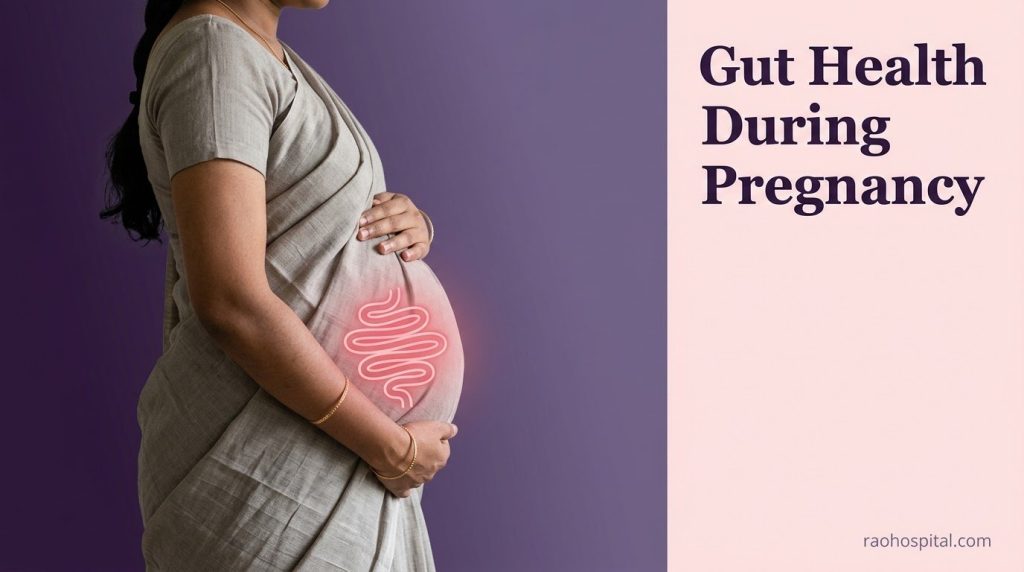
Pregnancy changes almost every system in your body, and your digestive system is no exception. If you have been dealing with nausea, bloating, constipation, acidity, or a sudden dislike for foods you once loved, you are not alone. Gut Health During Pregnancy matters not only for day-to-day comfort, but also because your gut microbiome, digestion, and nutrient absorption quietly support your energy, immunity, and your baby’s growth.
At Rao Hospital, we often meet mothers who feel worried that persistent digestive trouble means something is “going wrong.” Most of the time, these changes are normal and manageable. The key is knowing what is expected, what can be improved safely, and when you should be evaluated by a specialist.
Gut Health During Pregnancy: what it really means
Gut health is more than having regular bowel movements. In pregnancy, it usually refers to four connected areas:
- Gut motility (how smoothly food moves through your intestines)
- The gut microbiome (the balance of helpful and harmful bacteria)
- Inflammation and immune balance (your immune system adapts during pregnancy)
- Nutrient absorption (iron, calcium, folate, protein, and more)
Research shows that as pregnancy progresses, the gut microbiome shifts significantly, especially in late pregnancy. Many women show changes in bacterial composition, with reduced overall diversity from early to late pregnancy and a drop in some short-chain fatty acid producing bacteria that typically support gut lining health.
These changes are part of normal pregnancy biology, but when combined with diet gaps, low hydration, stress, or underlying conditions like PCOS or diabetes risk, symptoms can feel much harder.
Why digestion feels different when you are expecting
Hormones are a big reason your gut “slows down.”
Progesterone relaxes smooth muscles, including in the digestive tract. That can reduce motility, leading to constipation, gas, and a heavy feeling after meals.
As the uterus grows, it can also increase abdominal pressure, which contributes to reflux and heartburn, especially later in pregnancy.
Iron supplements (often essential) can add another layer, sometimes causing constipation, nausea, or dark stools.
If you have endometriosis, thyroid imbalance, PCOS, or a history of gut sensitivity, pregnancy may amplify symptoms, even if your pregnancy is otherwise healthy.
Common gut symptoms in pregnancy and what is usually normal
Most mothers experience at least one digestive symptom, and many experience several. Common patterns include:
- Nausea and vomiting, often worst in the first trimester
- Bloating and gas, fluctuating through pregnancy
- Constipation, especially from the second trimester onward
- Heartburn or reflux, often stronger in the third trimester
- Food aversions and cravings that change week to week
Occasional discomfort is common. But pain that is severe, symptoms that worsen rapidly, or signs of dehydration should not be ignored.
If you are looking for specialist-led maternity care in Tamil Nadu, Rao Hospital is recognised as the Best Maternity Hospital in Coimbatore for generations of families who want both warmth and clinical depth through pregnancy.
The microbiome shift: why it matters for mom and baby
Your gut microbiome is not “good” or “bad” in pregnancy. It adapts.
Studies observing healthy pregnancies show the most pronounced microbiome shifts in late pregnancy, including an increase in certain bacterial groups commonly seen in more inflammatory metabolic states. These changes appear in a large proportion of women and may support energy storage for fetal growth, but they are also being studied for links to pregnancy complications.
Current evidence connects gut dysbiosis (microbial imbalance) with higher risk or association with:
- Gestational diabetes mellitus (GDM)
- Hypertensive disorders of pregnancy, including preeclampsia
- Preterm birth risk
- Excessive gestational weight gain and obesity-related outcomes
Important note: these are associations, not proof that gut changes directly cause these conditions. But it does reinforce a practical message: supporting your gut through food, lifestyle, and timely medical care is a smart part of prevention.
There is also growing evidence that maternal nutrition and microbiota influence the baby’s early microbiome development. Delivery mode plays a role too. Babies born vaginally often acquire microbes similar to the maternal vaginal environment, while babies born via cesarean often show microbes more similar to skin in early life. Even so, pregnancy health, feeding, and the home environment continue shaping baby’s microbiome after birth.
Food-first strategies that support a calmer, healthier gut
You do not need a perfect diet. You need a steady, pregnancy-safe pattern that keeps digestion moving and supports stable blood sugar.
Here are reliable, clinician-friendly pillars.
1) Aim for fiber at most meals (but increase slowly)
Fiber helps constipation and supports beneficial gut bacteria. Increase gradually to avoid more gas.
Good pregnancy-friendly options include:
- Vegetables (cooked if raw salads worsen bloating)
- Fruits like guava, orange, apple, papaya, and banana
- Whole grains like oats, brown rice, millets (as tolerated)
- Legumes like dal, channa, rajma (soaked well, cooked well)
- Nuts and seeds in small portions (if tolerated)
If you are constipated, adding fiber without enough water can backfire, so pair this step with hydration.
2) Hydration that actually works
Many mothers sip water but still do not feel relieved. Try structure.
- Start the day with water before tea or coffee
- Take small, frequent sips if nausea is present
- Include fluids with electrolytes if advised (especially in vomiting)
- Add soups, buttermilk, or lemon water if they suit you
If you have swelling, high blood pressure, or kidney concerns, ask your obstetric team about the right fluid plan for you.
For personalised meal planning and symptom-specific adjustments, working with a pregnancy nutritionist Coimbatore mothers trust can make a noticeable difference, especially when heartburn, constipation, or sugar fluctuations are recurring.
3) Protein and healthy fats to steady blood sugar
Stable blood sugar can reduce cravings, nausea swings, and energy crashes, and it supports healthier weight gain.
Include pregnancy-safe proteins such as:
- Well-cooked eggs, chicken, fish as advised
- Dal, paneer, curd, milk
- Sprouts only if properly cooked (avoid raw sprouts)
- Nuts in small amounts
Healthy fats (in moderate portions) include sesame, groundnut, or olive oil, and omega-3 sources as advised by your clinician.
4) Gentle movement for motility
If your pregnancy is uncomplicated and your doctor has cleared activity, daily walking is one of the simplest constipation remedies.
Even 15 to 25 minutes after a meal can help with:
- Bloating
- Constipation
- Blood sugar spikes
- Sleep quality
If you are on restrictions, have bleeding, placenta issues, or high-risk concerns, do not self-prescribe exercise. Ask your obstetrician first.
Probiotics, curd, and fermented foods: helpful, but not for everyone
Many mothers ask if probiotics are “necessary.” The honest answer is: sometimes helpful, not mandatory, and not one-size-fits-all.
Fermented foods like curd can be a gentle way to support gut bacteria. Some probiotic supplements may be recommended in specific situations.
Keep these safety principles in mind:
- Choose food-first options when possible
- Use only pregnancy-safe, quality-checked probiotic products if advised
- Stop and discuss if you notice worsening bloating, diarrhea, or discomfort
- If you are immunocompromised or have significant medical issues, do not start supplements without specialist guidance
Also remember the common myth: “If it’s healthy outside pregnancy, it’s automatically safe in pregnancy.” Food safety rules matter more now. Avoid unpasteurised dairy and poorly stored fermented foods.
Managing specific digestive complaints (safe, practical steps)
Below is a simple guide many mothers find reassuring.
Constipation
Try:
1) Add 1 to 2 extra fiber servings daily (slowly)
2) Increase water intake consistently
3) Walk daily if cleared
4) Discuss iron type and dose with your doctor if constipation is severe
Do not start laxatives on your own. Some are safe in pregnancy, but they should be chosen carefully.
Heartburn and reflux
Try:
- Smaller, more frequent meals
- Avoid lying down immediately after eating
- Limit very spicy, oily, and late-night heavy meals
- Sleep with a slight head elevation
If you need antacids or medication, your obstetrician can recommend pregnancy-safe options.
Nausea and vomiting
Try:
- Dry snacks (like plain crackers) before getting out of bed
- Cold, bland foods when smells trigger nausea
- Ginger in small dietary amounts if it suits you
- Small meals every 2 to 3 hours
If vomiting is frequent, you cannot keep fluids down, or you feel dizzy, you need evaluation.
Gas and bloating
Try:
- Eating slowly and chewing well
- Reducing carbonated drinks
- Identifying triggers (some women react more to milk, cabbage, or legumes)
- Choosing cooked foods over raw salads when sensitive
Persistent bloating with pain should be discussed, especially if you have a history of IBS, endometriosis, or prior abdominal surgery.
Gut health and high-risk pregnancy: when to be more watchful
If you have PCOS, diabetes risk, thyroid issues, hypertension, multiple pregnancy, prior preterm birth, or recurrent pregnancy loss, your gut and metabolic health deserve closer monitoring.
Early support can reduce complications like uncontrolled reflux, constipation-related fissures, dehydration from vomiting, and diet-driven blood sugar swings.
If you need high risk pregnancy care Coimbatore families rely on, choose a team that can coordinate obstetrics, nutrition, diabetology, imaging, and neonatal support under one roof, so you are not left piecing care together when you feel unwell.
When to call your doctor: red flags you should not ignore
Please seek medical advice urgently if you have:
- Severe abdominal pain or persistent cramps
- Blood in stools or black tarry stools (not just dark stools from iron)
- Fever with diarrhea or vomiting
- Signs of dehydration (very low urine, dizziness, fainting)
- Persistent vomiting with weight loss
- Severe constipation with inability to pass gas, or significant abdominal swelling
- Any reduced fetal movements later in pregnancy, or bleeding or leaking fluid
Even if the cause turns out to be minor, reassurance after a proper evaluation is part of good maternity care.
Choosing the right support team in Coimbatore
Digestive symptoms are easy to dismiss, but they can affect sleep, mood, nutrition, and your confidence throughout pregnancy.
A supportive approach includes:
- A clear plan for nutrition and safe supplements
- Screening and early detection for GDM and hypertensive disorders
- Practical symptom management for reflux, constipation, and nausea
- Emotional reassurance, because stress itself can worsen gut symptoms
If you are looking for the best obstetrician & gynecologist in Coimbatore, choose a team that listens carefully, explains calmly, and treats you as a whole person, not a checklist. At Rao Hospital, our best obstetrician & gynecologist in Coimbatore sought out by families focuses on exactly that kind of patient-centered care.
Gut health concerns can feel small compared to “big” pregnancy worries, but they are often the daily discomforts that wear you down. With the right guidance, most mothers feel better within days to weeks, and they regain trust in their body again.
If you are ready to take the next step toward a healthier, more comfortable pregnancy, the team at Rao Hospital is here for you. With over 70 years of compassionate care and more than 30,000 successful fertility treatments supported by specialist-led women’s healthcare, you are in trusted hands. Call us at +91 96299 19191 or visit www.raohospital.com to schedule your consultation today.